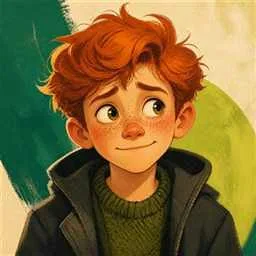
Ron Weasley is Harry’s first close friend at Hogwarts and the trio’s most immediate guide to growing up in a wizarding family. His first-year story combines humour, insecurity, practical knowledge and a decisive act of courage.
Who Ron is in book one
Ron belongs to a large magical family. The official fact file describes him as the second youngest of seven Weasley children and highlights loyalty, bravery and selflessness. At the beginning of Philosopher’s Stone, he brings experience of the wizarding world that Harry lacks, while feeling the pressure of older siblings’ achievements.
Our reading: his normality is new to Harry. Everyday family complaints, second-hand belongings and familiar wizarding customs can all feel ordinary to Ron and fascinating to his new friend. Their train compartment brings those perspectives together. Ron’s embarrassment and Harry’s curiosity are not competing explanations of the scene; both can be true. Watching for that difference helps explain why they connect so quickly without pretending their circumstances are the same.
Book context: Philosopher’s Stone, chapters 6–7, 9–13, 16–17.
Book-one spoilers: Key book-one moments
Book-one spoilers: the Hogwarts Express establishes the friendship before school sorting fixes the boys within Gryffindor. At Halloween, Ron’s unkind remark about Hermione is followed by his participation in the rescue from the troll. Their relationship is therefore allowed an uncomfortable beginning and a change in behaviour.
The Mirror of Erised gives Ron an image of individual distinction, contrasting with Harry’s wish for family. The chess challenge then makes his judgement indispensable. He understands the game well enough to guide his friends and accept the cost of the winning move. The official encyclopedia names wizard chess among Ron’s skills; Chapter Sixteen is the clearest first-book example of why a familiar hobby can become an extraordinary contribution.
Book context: Philosopher’s Stone, chapters 6–7, 9–13, 16–17.
Ron in the 2001 film
Rupert Grint plays Ron in the 2001 adaptation. The chess sequence is a particularly useful comparison because both versions make his decision central. On the page, the reader follows explanation and imagined movement; on screen, the scale, sound and movement of the pieces make the cost visible.
Our interpretation: comedy and courage need not cancel each other out. A character who reacts openly to fear can make a deliberate decision feel more substantial. Compare Ron’s humour on the train with his concentration at the chessboard. Ask what changes in his posture, pace or attention. The useful distinction is between a comic reaction and a lack of ability: the chess scene gives a clear reason to avoid confusing the two.
Primary comparison: released film.
A friend with knowledge of his own
Ron’s contribution is not limited to explaining unfamiliar words. He gives Harry a connection with family life, school expectations and the emotional pressures of comparison. Our view is that his insecurity is most effective when it has a specific context. The difference between Harry’s fame and Ron’s wish to be noticed means attention can feel very different to the two boys.
A careful reread also resists granting one friend ownership of courage and another ownership of intelligence. Ron reasons through the chessboard; Hermione takes risks; Harry needs their help. The final obstacles work because the three children possess different experiences rather than fixed, exclusive qualities. Follow the moments when Ron is listening seriously as well as the lines that make other characters laugh. They belong to the same person.
Book context: Philosopher’s Stone, chapters 6–7, 9–13, 16–17.
Discussion: being seen and being useful
Our interpretation: Ron’s wish for recognition deserves to be considered separately from vanity. In a busy family or a famous friend’s company, a child may worry about being overlooked. The useful discussion is what kind of attention would reassure him, and what kind might simply make a comparison more uncomfortable. That helps explain why the same public event can feel exciting to one boy and exposing to another.
Choose a scene where Ron knows something Harry does not. Is he explaining a custom, offering an opinion or making a decision? Those acts use knowledge differently. A guide that treats Hermione as the only intelligent friend can miss this range; a guide that praises Ron only for loyalty can do the same.
For a film comparison, follow the listening face during another character’s speech. Comedy often receives attention because a line is easy to repeat, but a held reaction can show pride, worry or calculation. Compare that with the novel’s account of the same exchange. A reading group can disagree about the effect while grounding its discussion in what is actually present. The aim is to notice a complete child, whose humour and fear coexist with competence and generosity.
For a family read, invite each listener to choose one moment when Ron contributes something neither friend could supply in quite the same way, then explain the choice from the scene.
Book context: Philosopher’s Stone, chapters 6–7, 9–13, 16–17.
What to watch for in the series
Questions for viewing and discussion:
- How will the series give Ron’s family experience a distinct place within the trio?
- What everyday school moments will establish his chess ability before the final challenge?
- How will comedy preserve his warmth without making insecurity the only thing we notice?
- What contrast will the Mirror scene create between the two boys’ desires?
- How much attention will be given to Ron and Hermione learning to trust one another?
Read and listen
Read the train journey alongside the Christmas chapters before returning to the chess game. Those passages connect Ron’s family background, his private ambitions and the skill he contributes at the end. In audio, listen for the movement between joking, embarrassment and concentration. A sample can help you choose a performance whose treatment of Ron you enjoy, especially for a shared family listen. The full first novel is the most useful purchase for this comparison: later summaries often remember the chess sacrifice but lose the ordinary conversations that make it matter.
Compare print editions · Choose an audiobook · More character guides