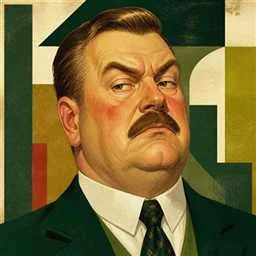
Vernon, Petunia and Dudley Dursley are the family Harry lives with before Hogwarts. The first book uses their household to establish his loneliness, their fear of anything unusual and the emotional importance of finding a different kind of welcome.
Who the Dursleys are in book one
Petunia is Harry’s aunt, Vernon her husband and Dudley their son. The official character entries describe their hostility towards magic and the unequal treatment of the two children. In Philosopher’s Stone, their family home provides the starting conditions against which Harry experiences the wizarding world.
Our interpretation: the useful contrast is not simply between ordinary life and exciting magic. Ordinary kindness is missing too. Harry needs information, security and affection as well as access to Hogwarts. That is why a helpful parent on a station platform can matter beside a spectacular shopping street. The Dursleys’ treatment establishes a human absence that cannot be solved only by learning spells or finding money in a vault.
Book context: Philosopher’s Stone, chapters 1–4, 6, 17.
Vernon: trying to keep the unusual outside
Book-one spoilers: the opening chapter follows Vernon before Harry is old enough to act within the story. He notices events he cannot comfortably explain and tries to hold on to a reassuring idea of normality. That viewpoint allows a reader to encounter signs of the magical world through someone determined not to acknowledge them.
The letters addressed to Harry then turn control of a household into an increasingly difficult problem. Vernon’s attempts to prevent their delivery move the family through a succession of places before Hagrid arrives. Our reading is that repetition drives the comedy: each attempt at control confirms how little control he has over this particular intrusion. The situation is funny in its escalation while remaining serious for the child being denied his correspondence and his history.
Book context: Philosopher’s Stone, chapters 1–4, 6, 17.
Petunia: family knowledge and concealment
Petunia connects Harry with his mother’s family. When Hagrid reveals the truth, Harry learns that his aunt knew more about magic than he had been allowed to understand. This changes the meaning of silence in the household: the information was not simply unavailable; adults chose not to tell him.
Our interpretation: Petunia is therefore important to the first book’s question of who controls a child’s account of his own past. A new reader can recognise hostility and concealment without needing the later novels’ fuller explanations. Keep the discussion anchored to what she says and what Harry can learn from it here. That preserves the shock of discovery and avoids making an introductory guide depend on revelations from a much later stage of the story.
Book context: Philosopher’s Stone, chapters 1–4, 6, 17.
Dudley: privilege within the same house
Dudley’s birthday and the zoo visit make the difference between the cousins’ lives visible. The same adults respond differently to the two boys’ wishes, conduct and comfort. Harry’s accidental magic creates a situation he cannot explain, and punishment follows.
Our reading: the contrast works through ordinary details before it works through spectacle. A birthday count, an outing and the assumption that one child matters more establish a family hierarchy. Dudley’s bullying belongs within that environment of indulgence. Describing him accurately does not require inventing thoughts or treating him as responsible for every adult decision. Look at what he does, what the adults permit and how Harry anticipates the household’s response. Those are related parts of the scene, rather than one interchangeable explanation.
Book context: Philosopher’s Stone, chapters 1–4, 6, 17.
The Dursleys in the 2001 film
Richard Griffiths plays Vernon, Fiona Shaw plays Petunia and Harry Melling plays Dudley in the first film. Compare the film’s concentrated home and zoo sequences with the book’s opening through Vernon’s ordinary day. The different starting points give the audience different routes into the same contrast between public normality and private hostility.
Our view: screen comedy can make scale, noise and reaction immediate. The challenge for a viewer is to notice what that energy is doing to Harry’s experience as well. A scene can invite laughter at an adult’s loss of control while keeping the child’s vulnerability present. Compare the framing of Harry with the family group, who occupies the centre of a room and who receives a response when speaking. Those formal choices tell a story beyond the dialogue.
From exclusion to a different kind of home
The first novel repeatedly offers alternatives to the Dursleys’ way of relating to Harry. Hagrid gives information and practical help. Molly answers a question at King’s Cross. Ron makes room in a train compartment. Christmas brings a gift that includes Harry in another family’s tradition.
Our interpretation: these are not identical forms of rescue, and it is useful to keep them distinct. Some provide knowledge, others companionship or recognition. Together they make Hogwarts emotionally meaningful without pretending that a school can erase what has already happened. Follow Harry’s response when help is offered without a condition attached. Surprise can reveal what he has learned to expect from adults more effectively than a narrator explaining the whole household again.
Book context: Philosopher’s Stone, chapters 1–4, 6, 17.
A spoiler-aware way to discuss the family
Readers who already know the series may be tempted to explain the Dursleys through later revelations. For a book-one guide, resist that shortcut. The first novel is structured around Harry discovering facts that adults have concealed, and readers can share the discovery without knowing every eventual explanation.
Our view: this boundary also makes a discussion more precise. Ask whether a claim concerns a direct action, a spoken belief or an inference about motivation. The first two can be checked against a chapter; the third should be identified as interpretation. You can criticise the treatment shown in the opening chapters without diagnosing real people or importing labels the story does not supply. That keeps a difficult family discussion readable and grounded in the text.
Book context: Philosopher’s Stone, chapters 1–4, 6, 17.
A reading-group comparison
Our interpretation: place one early household exchange beside a later offer of help. Compare who is permitted to ask a question, whether an answer is patient and what the child is expected to provide in return. That keeps the discussion specific enough to be useful, especially for younger readers.
A film group can perform the same exercise without quoting whole scenes: describe how the room is arranged and how attention is distributed. The contrast between exclusion and welcome becomes visible through behaviour. It also makes room for a discussion of kindness that does not depend on deciding which magical event is the most impressive part of Harry’s first year.
Give a new reader room to describe the difference in their own words before supplying a later-book explanation.
Book context: Philosopher’s Stone, chapters 1–4, 6, 17.
What to watch for in the series
Questions for viewing and discussion:
- Will the series begin with Vernon’s view of an apparently ordinary day, and what would that perspective establish?
- How will comedy around the letters preserve the seriousness of Harry being denied information?
- What will the household’s staging show about the cousins’ unequal treatment?
- How will Petunia’s words change the meaning of what Harry has previously been told?
- How will kind encounters later in the story recall the needs established at the beginning?
- What room will the adaptation leave for first-time viewers to understand the family without later-book explanations?
The announced actors
- Official: Daniel Rigby — Vernon Dursley.
- Official: Bel Powley — Petunia Dursley.
- Official: Amos Kitson — Dudley Dursley.
Read and listen
Read the opening four chapters as one movement before comparing individual scenes with the film. The progression from a supposedly ordinary household to Hagrid’s arrival builds through repetition, concealment and changes of place. In audio, listen for how narration treats Vernon’s certainty and Harry’s uncertainty differently. Then compare the station scene and Christmas chapter: both provide answers to needs the opening has established. An unabridged first novel preserves Vernon’s opening viewpoint, which is especially useful for film-first readers. Our Harry, Hagrid and Molly guides follow three routes out of the isolation that this household introduces.
Compare print editions · Choose an audiobook · More character guides
Sources
- Official: Announced performers and roles; Ginny cast distinguished by season.
- Primary novel reference: Harry Potter and the Philosopher’s Stone, chapters 1–4, 6, 17. Plot context, not a new production claim.
- Official: Explore the linked character reference for background; this guide keeps later-book revelations out of view.
- Official: Explore the linked character reference for background; this guide keeps later-book revelations out of view.
- Official: Explore the linked character reference for background; this guide keeps later-book revelations out of view.
- Primary film reference: Released 2001 film is primary comparison; no production-motive claim.