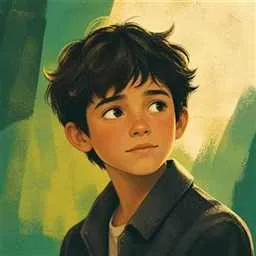
Harry Potter is the boy whose discovery that he is a wizard opens the story of Hogwarts. In Philosopher’s Stone, his first school year is also a search for friendship, family and a place where he belongs.
Who Harry is in book one
Harry begins the first book living with his aunt, uncle and cousin, the Dursleys. Hagrid tells him about his parents and Hogwarts on his eleventh birthday. The official character fact file confirms that Harry survived Voldemort’s attempt to kill him as a baby, but did not know his own magical identity while growing up. Those starting conditions matter more to this first story than a list of powers acquired in later books.
Our reading: being famous is less immediately valuable to Harry than being welcomed. His interest in Ron’s family and his loyalty to Hagrid provide useful ways into the character. Ask who allows him to speak, who explains something patiently and who assumes they already know him. Harry’s reactions to those people show his judgement forming before he understands the wider magical world.
Book context: Philosopher’s Stone, chapters 2–7, 9–12, 15–17.
Book-one spoilers: Key book-one moments
Book-one spoilers: Harry’s encounter with the snake at the zoo belongs to the period before he understands his magic. Diagon Alley then gives him several different kinds of introduction: money at Gringotts, school supplies, his wand and his first meeting with Draco. On the Hogwarts Express, meeting Ron makes the coming school year feel personal rather than simply spectacular.
At Hogwarts, friendship with Hermione develops after the Halloween troll. Flying gives Harry an ability he can enjoy and a role within Gryffindor. The Mirror of Erised exposes his longing for family, while the final attempt to protect the Stone tests whether he will act for someone else. The chapter sequence is worth preserving on a reread: excitement, belonging and danger do not arrive separately. They become entangled as Harry grows more confident.
Book context: Philosopher’s Stone, chapters 2–7, 9–12, 15–17.
Harry in the 2001 film
Daniel Radcliffe plays Harry in the 2001 film. Compare the first meeting with Draco in the film with the earlier robe-shop encounter in the novel. The order of an introduction changes what an audience already knows about Harry’s loyalties. The book gives him a response to Draco before the school has assigned either boy a house.
Our interpretation: a screen performance must make Harry’s uncertainty legible without relying on continuous access to his thoughts. Watch the pauses around unfamiliar adults, the way he looks at new spaces and the change when he is with his friends. The Mirror sequence is an especially useful comparison because the central action is looking. Its emotional subject is recognition, rather than the discovery of another impressive magical object.
Primary comparison: released film.
Friendship, choices and the mystery
Harry’s point of view makes the first book a mystery as well as a school adventure. He sees details without necessarily interpreting them correctly. Distinguishing an observation from Harry’s explanation of it is a rewarding rereading exercise: what happened, what did he think happened, and what does the ending reveal?
Our view: Harry’s mistakes help make the friendship credible. Hermione and Ron supply different kinds of knowledge and judgement, and the final challenges draw attention to those differences. A guide to Harry should therefore lead outward to his friends rather than treat them as equipment for the hero. His story gains force when belonging means listening to other people and accepting help, as well as finding the courage to take the final step himself.
Book context: Philosopher’s Stone, chapters 2–7, 9–12, 15–17.
A rereading exercise: what Harry notices
Our interpretation: Harry’s attention is an important guide to the emotional scale of the story. Make a short list of things that surprise him before Hogwarts, then compare it with what surprises him at Christmas. The first list may concern access to an unfamiliar world; the second can concern being remembered, wanted or understood. The exercise makes room for change without assuming every development must be a new magical ability.
When comparing the film, choose one scene and describe what the audience can learn before Harry speaks. A face in a crowd, a seat left open or a reaction to a gift can establish what matters to him. Then ask what the book supplies through narration that a screen version must communicate another way. There is no need to turn the comparison into a scorecard. The interesting result is a clearer understanding of how each medium makes a child’s private experience available to us.
For younger readers, discuss which offer of help they would find easiest to accept. It is a way into Harry’s choices that stays with friendship and trust instead of requiring knowledge of the final mystery.
Book context: Philosopher’s Stone, chapters 2–7, 9–12, 15–17.
What to watch for in the series
Questions for viewing and discussion:
- How will the series let us understand Harry’s thoughts when he is surrounded by people who know more than he does?
- What balance will it find between the pleasure of his first discoveries and the loneliness that makes those discoveries matter?
- Will the robe-shop meeting with Draco give their school rivalry a different starting point?
- How will time spent with Ron and Hermione distinguish everyday friendship from the larger mystery?
- What will the Mirror of Erised scene reveal through silence, framing and Harry’s reaction?
Read and listen
Read Harry’s first year in order rather than jumping straight to the final confrontation. Chapters two to seven establish the contrast between his old life and Hogwarts; the Christmas and Mirror chapters deepen what home means to him. On audio, listen for changes in his confidence across conversations with Hagrid, Ron, Draco and Dumbledore. Those shifts are a useful comparison even when two editions use different voices or a different performance style. Choose the unabridged first novel if you want the full school-year progression, and check the sample before selecting a narrator.
Compare print editions · Choose an audiobook · More character guides