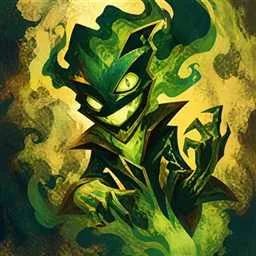
Peeves is Hogwarts’ resident poltergeist, a source of mischief whose presence makes school corridors unpredictable. Peter Serafinowicz is officially announced in the role for the HBO series.
Who Peeves is in book one
The official encyclopedia describes Peeves as a poltergeist who disrupts Hogwarts and makes work for caretaker Argus Filch. He enjoys disorder, throwing objects and tormenting the people around him. Those habits give him a distinct place among the school’s supernatural inhabitants.
Our interpretation: he helps the castle feel like a building that cannot be fully controlled by a timetable. Pupils may learn a rule, only to find that the corridor itself contains someone determined to make obeying it difficult. That creates a different kind of uncertainty from a secret villain. Peeves can complicate an ordinary walk without requiring every interruption to advance the central mystery. His usefulness lies partly in making daily school life feel active beyond Harry’s immediate purpose.
Book context: Philosopher’s Stone, chapters 7, 9, 12, 16.
Book-one spoilers: Key book-one moments
Book-one spoilers: Peeves appears during the children’s early navigation of Hogwarts and can expose pupils who are trying to move quietly. Around the attempted midnight duel, the risk of attracting attention becomes part of the journey through the school. Later, the children’s efforts to slip past authority also involve him.
For a reread, follow the relationship between noise and concealment. A corridor is not simply a route connecting two plot locations; it is a space where other inhabitants can interrupt, observe and announce. Peeves also has relationships with school adults and ghosts, making him part of a hierarchy that does not follow classroom rules neatly. The book’s distinction between what frightens pupils and what restrains Peeves is a useful detail to notice.
Book context: Philosopher’s Stone, chapters 7, 9, 12, 16.
Peeves and the 2001 film
Peeves does not appear in the released 2001 film. The comparison is therefore about the experience of Hogwarts when a disruptive recurring inhabitant is absent. Keep that separate from stories about deleted material or production decisions, which need their own source before being repeated.
Our view: removing a character can alter atmosphere even when the main chain of events remains understandable. Ask which small obstructions, noises and rivalries disappear with Peeves, and what other scenes supply energy in their place. A film’s moving staircases, ghosts and busy public spaces create their own version of a lively school. The useful comparison is how each version sustains the sense that Hogwarts has more happening in it than the mystery Harry is trying to solve.
Mischief, menace and school rhythm
Peeves can be read through timing. An interruption can relieve tension, create it or do both within a few lines. Our interpretation is that his humour is strongest when other characters have something to lose: peace, dignity, secrecy or control. Filch’s dislike also gives the trouble a practical aftermath, because someone is responsible for the mess.
An adaptation has many choices to make about that rhythm. A recurring character must be recognisable without stopping each scene for a full introduction. A joke needs enough time to land without swallowing the children’s purpose. Those are useful questions for viewers interested in adaptation, rather than reasons to prescribe particular scenes. Looking at Peeves alongside the twins and Filch also reveals three different relationships with disorder: enjoying it, producing it and trying to suppress it.
Book context: Philosopher’s Stone, chapters 7, 9, 12, 16.
Discussion: how a corridor becomes a scene
Our view: Peeves makes a good exercise in reading movement through a building. Sketch the simplest route the children want to take, then list the reasons that route becomes difficult. Some are physical, some depend on being seen or heard, and others arise from a person who enjoys interference. The castle becomes dramatic because a journey cannot be reduced to distance.
Now imagine the same passage without the interruption. The destination may remain unchanged, but the emotional experience is different. A school can feel quieter, more orderly or less inhabited even while the essential mystery still functions. This explains why readers may value a recurring character whose actions are not necessary to every plot summary.
For a future screen comparison, listen as well as look. A voice heard before its source is visible can change a corridor immediately. So can a sudden alteration in the reactions of nearby pupils. The question is how an adaptation makes the presence distinctive while leaving room for other inhabitants. Peeves, a ghost, a teacher and a caretaker should not all create the same kind of obstacle. Their differences give the same space several possible moods, helping a familiar castle continue to surprise without needing a new room in every scene.
Try describing one interrupted journey as though it were quiet. What feeling about Hogwarts disappears with the noise?
Book context: Philosopher’s Stone, chapters 7, 9, 12, 16.
What to watch for in the series
Questions for viewing and discussion:
- How will the series distinguish Peeves from the castle’s ghosts through movement, sound and behaviour?
- What balance will make his interruptions funny while preserving the trouble they cause pupils?
- How will his exchanges with Filch establish an ongoing school relationship?
- Will his presence change the tension of moving through Hogwarts after hours?
- How can a repeated source of chaos remain surprising without overwhelming quieter moments?
The announced actor
- Official: Peter Serafinowicz — Peeves.
Read and listen
Read Peeves within whole chapters instead of isolating a list of jokes. His effect often depends on what the children were trying to do before he appeared. In audio, listen for how a performance changes the pace at an interruption and returns it to the interrupted action. The unabridged novel is the essential comparison for film-first fans because the released film cannot supply an equivalent performance of this character. Our essay on Peeves and school life considers the wider atmosphere, while the Filch guide follows the person most consistently left to deal with his disruption.
Compare print editions · Choose an audiobook · More character guides
Sources
- Official: Announced performers and roles; Ginny cast distinguished by season.
- Primary novel reference: Harry Potter and the Philosopher’s Stone, chapters 7, 9, 12, 16. Plot context, not a new production claim.
- Official: Explore the linked character reference for background; this guide keeps later-book revelations out of view.
- Primary film reference: Released 2001 film is primary comparison; no production-motive claim.